

Setting up your Webhooks
Access your Dashboard
Log in to your EPayClub dashboard using your email and password.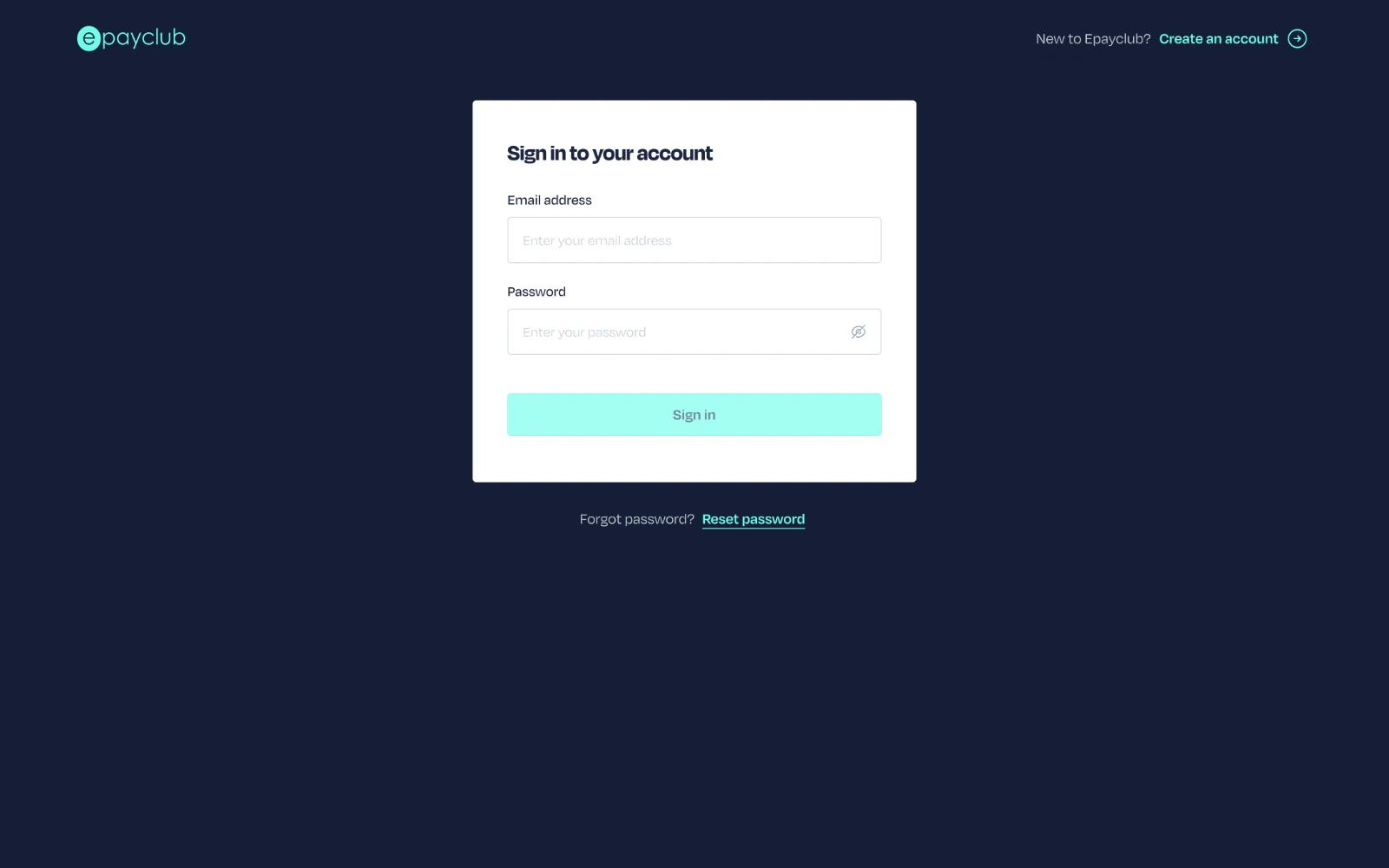
Navigate to your Webhook Settings
Select 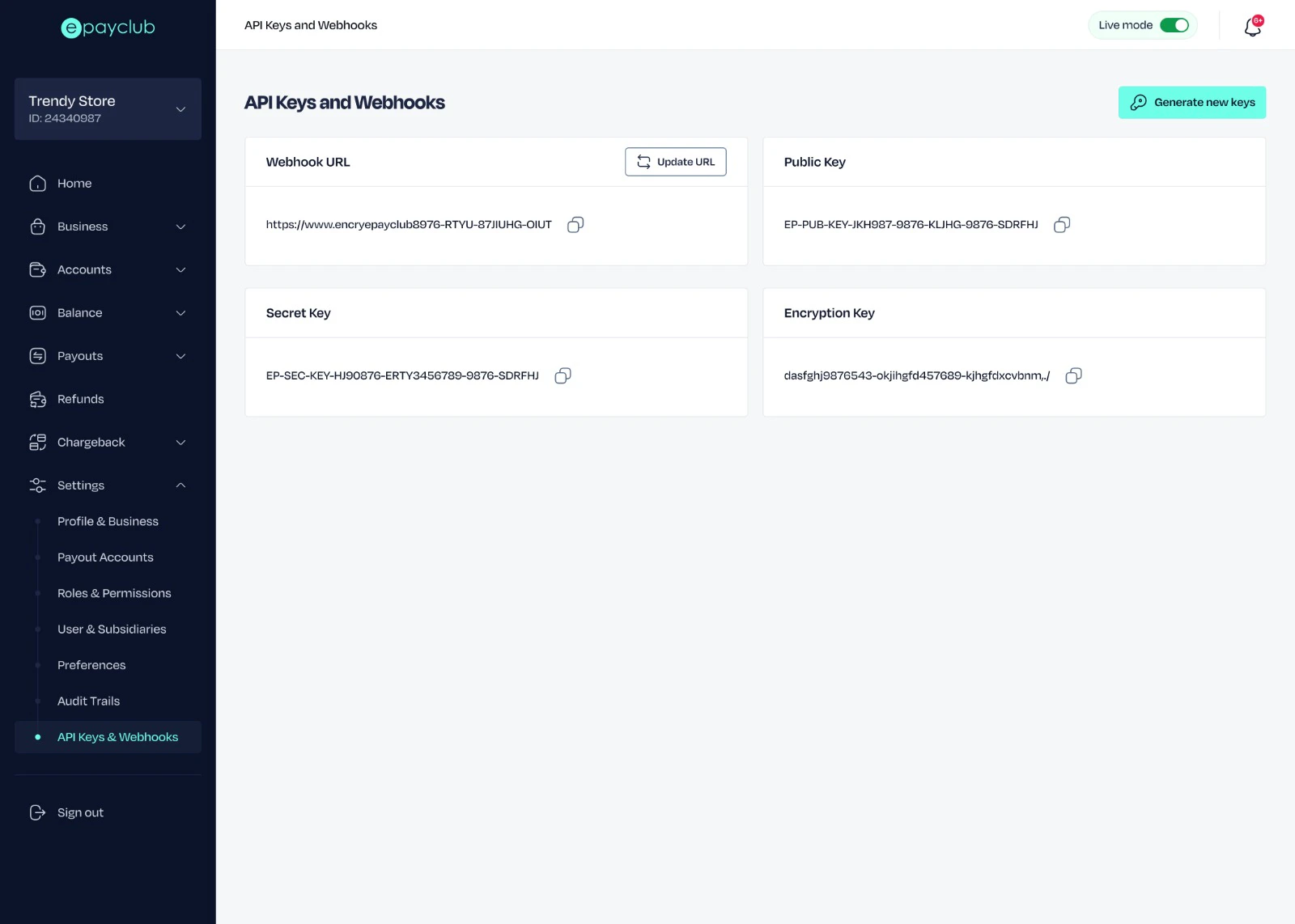
API Keys and Webhooks from your settings menu.Update your Webhook URL
Add your server’s webhook endpoint to the webhook URL field.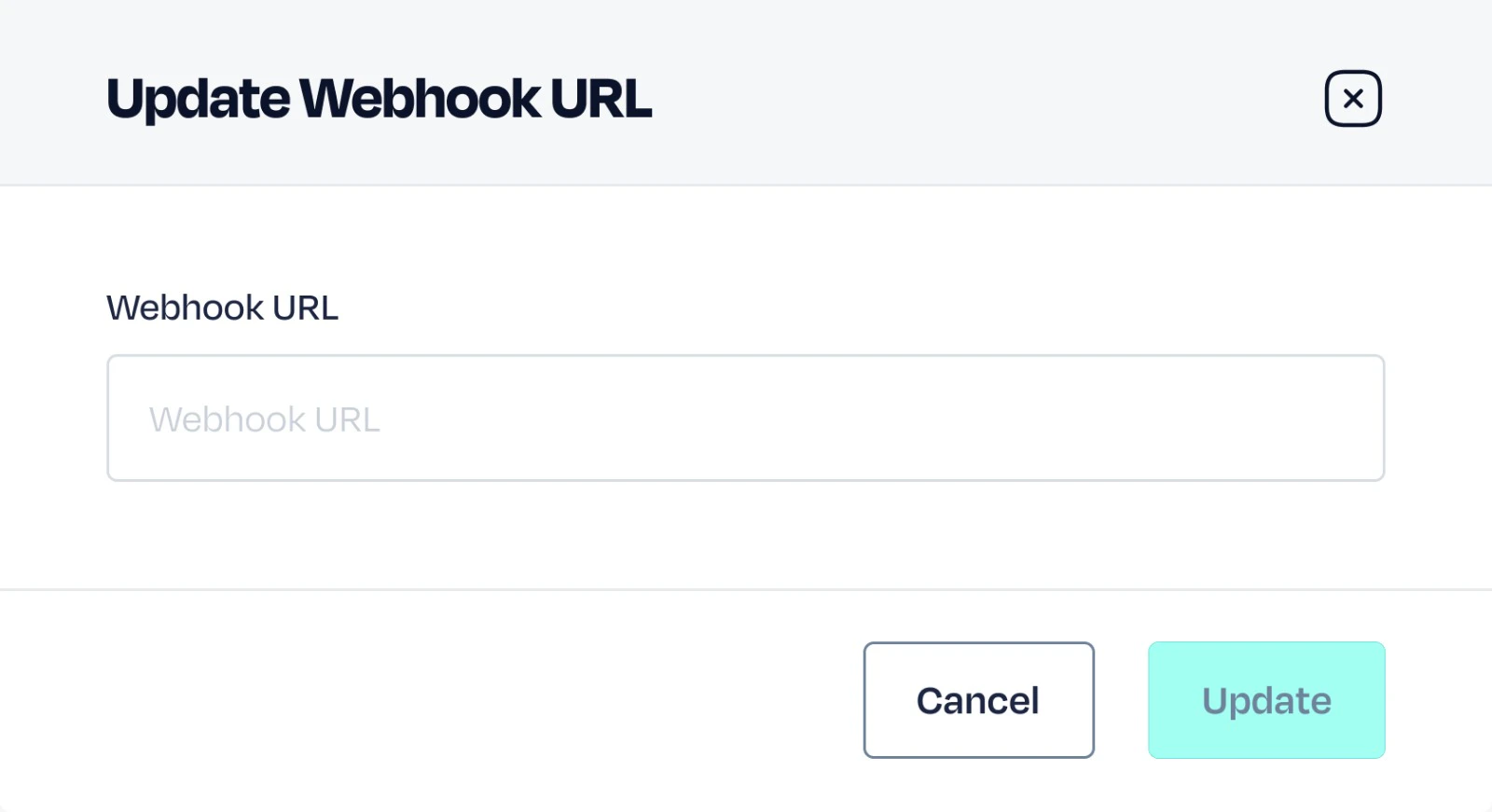
Confirm your changes
Save your settings update.
Webhook Structure
When you receive a webhook, each event is a JSON object with:response.data: This object contains the actual transaction and order information.response.data.customer: This object returns customer-related information to confirm who completed the payment.response.data.orderPayments: This returns the order status and other important order-related information.
Webhook Example
Best Practices
- Acknowledge webhook receipt promptly to prevent timeouts, return a 200 HTTP status code immediately, and offload long-running tasks.
- Prevent duplicate actions and validate data consistency. Re-query the API to verify data, and track processed events.
- Set up a back polling job for cases of downtime with your webhook server.